- Home
- Blog
- Map
- Destinations
Northern Africa
Central Africa
Eastern Africa
Western Africa
Southern Africa
Afro-Cuisine
- Meals
- Ingredients
- Shop

The Rich History and Cultural Significance of Kenyan Pilau
Kenyan Pilau is more than food—it’s a celebration of flavor, history, and community. This aromatic rice dish, rich with spices, has deep roots along the Swahili coast and carries the story of trade, migration, and cultural exchange. From festive gatherings to everyday family meals, pilau holds a cherished place on Kenyan tables, symbolizing hospitality and togetherness.
Summary
Kenyan pilau is an aromatic rice dish rooted in the Swahili coast, blending Arab trade influences with local creativity to become a symbol of heritage, hospitality, and unity. Spiced with cumin, cloves, and cardamom, it varies by region—sometimes enriched with coconut milk or local meats. More than food, pilau is central to weddings, festivals, and family gatherings, where cooking it is a communal act of generosity and celebration. Each serving reflects Kenya’s history, cultural exchange, and enduring spirit of togetherness.The Origins of Kenyan Pilau
Pilau traces its beginnings to the Swahili coast, where Arab traders introduced rice and spices centuries ago. The word “pilau” comes from the Arabic “pilaf,” meaning rice cooked with spices, meat, and sometimes vegetables.
As trade expanded, so did pilau. Communities adapted the dish with their own flavors and techniques. Spices like cumin, cloves, and cardamom—once rare—became household staples. This blend of influences created the Kenyan pilau we know today: fragrant, hearty, and deeply tied to the nation’s identity.
Regional Variations of Pilau
Pilau changes depending on where you go in Kenya. Coastal cooks often add coconut milk for creaminess, (Coconut Pilau Recipe) while inland families may include local meats and vegetables. These variations show the creativity of Kenyan kitchens, transforming a simple rice dish into a flavorful story of heritage and adaptation.
Pilau in Kenyan Traditions and Celebrations
In Kenya, pilau is more than a meal—it’s part of the culture. Families prepare it for weddings, Eid al-Fitr, and special gatherings. Cooking pilau is often a group activity, filled with laughter, stories, and shared effort.
The dish also carries symbolic meaning. Large pots of pilau represent abundance and generosity. Serving it to guests shows hospitality, respect, and goodwill. For many, pilau is not just nourishment but a ritual of unity.
In some communities, pilau also connects to spirituality. During religious festivals, it’s prepared alongside prayers and rituals, reinforcing its role as food that nourishes both body and soul.
More Than Just a Dish
Kenyan pilau is history, heritage, and hospitality wrapped into one. From the spice routes of the coast to modern kitchens, pilau continues to bring people together. Each bite is a taste of Kenya’s diverse culture and enduring spirit of community.
The Recipe
A celebration of bold spices and hearty ingredients that brings people together.
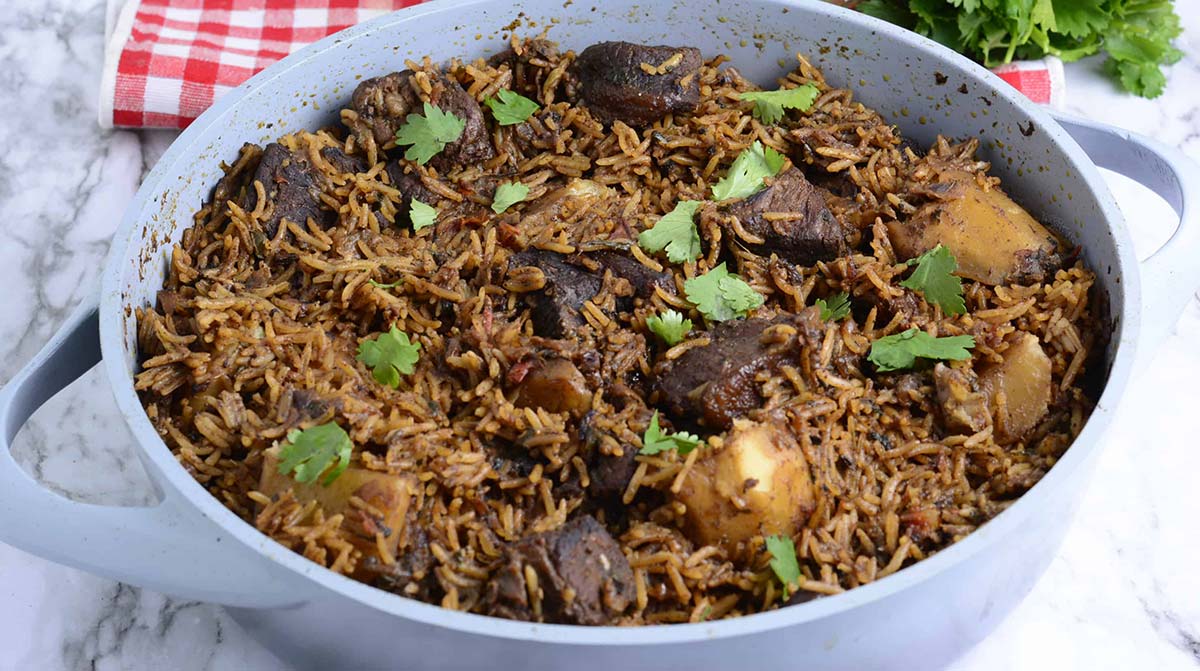
Kenyan Pilau is a fragrant and flavorful rice dish, richly spiced and often served on special occasions. It’s cooked with aromatic spices, meat, and sometimes vegetables, creating a perfect one-pot meal. For a vegetarian option, omit the meat and cook with vegetable stock. You can add vegetables like carrots or peas for added texture.
For the Pilau Spice Mix:
1 tsp cumin seeds
1 tsp cardamon pods
1 tsp whole cloves
1 small cinnamon stick
½ tsp black peppercorns
For the Rice:
2 cups basmati rice, rinsed and soaked for 20 minutes
1 lb beef or goat meat, cut into cubes (optional, can substitute with chicken or omit for vegetarian)
4 cups cups water or beef stock
3 tbsp vegetable oil or ghee
2 medium onions, thinly sliced
2 cloves garlic, minced
1 -inch piece of ginger, minced
2 medium tomatoes, finely chopped
Fresh cilantro, chopped (for garnish)
Salt, to taste
Directions
1
In a dry pan, toast the cumin seeds, cardamom pods, cloves, cinnamon stick, and black peppercorns over medium heat for 1–2 minutes until fragrant. Grind the toasted spices into a fine powder using a spice grinder or mortar and pestle. Set aside.
(Alternatively, use 1–2 tsp pre-made or store-bought Pilau masala spice blend.)
2
In a large pot, heat 1 tablespoon of oil over medium-high heat. Add the meat and sear until browned. Add 2 cups of water or stock and simmer until the meat is tender, about 30–40 minutes. Reserve the broth for cooking the rice.
3
In the same pot, heat the remaining oil over medium heat. Add the sliced onions and cook, stirring occasionally, until deep golden brown (caramelized), about 8–10 minutes. This step adds depth of flavor.
4
Stir in the garlic, ginger, and ground Pilau spices. Cook for 1–2 minutes until fragrant. Add the chopped tomatoes and cook until they soften and meld into a sauce, about 5 minutes.
5
Return the cooked meat to the pot and stir to coat it with the spice mixture. Drain the soaked rice and add it to the pot, stirring gently to combine.
6
Pour in the reserved broth and/or water to cover the rice and meat (about 4 cups total) then add some salt to taste. Bring it to a boil, then reduce the heat to low, cover tightly, and simmer for 15–20 minutes, or until the rice is tender and the liquid is fully absorbed.
7
Fluff the rice with a fork and garnish with chopped cilantro. Serve hot with kachumbari (a Kenyan tomato and onion salad) or yogurt.
Ingredients
For the Pilau Spice Mix:
1 tsp cumin seeds
1 tsp cardamon pods
1 tsp whole cloves
1 small cinnamon stick
½ tsp black peppercorns
For the Rice:
2 cups basmati rice, rinsed and soaked for 20 minutes
1 lb beef or goat meat, cut into cubes (optional, can substitute with chicken or omit for vegetarian)
4 cups cups water or beef stock
3 tbsp vegetable oil or ghee
2 medium onions, thinly sliced
2 cloves garlic, minced
1 -inch piece of ginger, minced
2 medium tomatoes, finely chopped
Fresh cilantro, chopped (for garnish)
Salt, to taste
What is Kenyan pilau made of?
Kenyan pilau is rice cooked with spices such as cumin, cloves, cardamom, and cinnamon. It often includes beef, chicken, or goat, and sometimes coconut milk for added flavor.
What makes Kenyan pilau different from other rice dishes?
Unlike plain rice, pilau is packed with spices and cooked in a rich broth, giving it a distinct aroma and deep flavor. Its cultural significance also sets it apart—it’s a meal for celebrations and community gatherings.
Is Kenyan Pilau the same as Biryani?
No, they are different. While both dishes use rice and spices, Biryani is more elaborate, often layered with marinated meat, fried onions, and sometimes potatoes. Pilau is simpler, with the rice and spices cooked together in one pot, giving it a distinctive earthy and smoky taste.
When do Kenyans traditionally serve pilau?
Pilau is common at weddings, Eid al-Fitr, family gatherings, and festive events. It symbolizes generosity, unity, and the joy of sharing meals with loved ones.