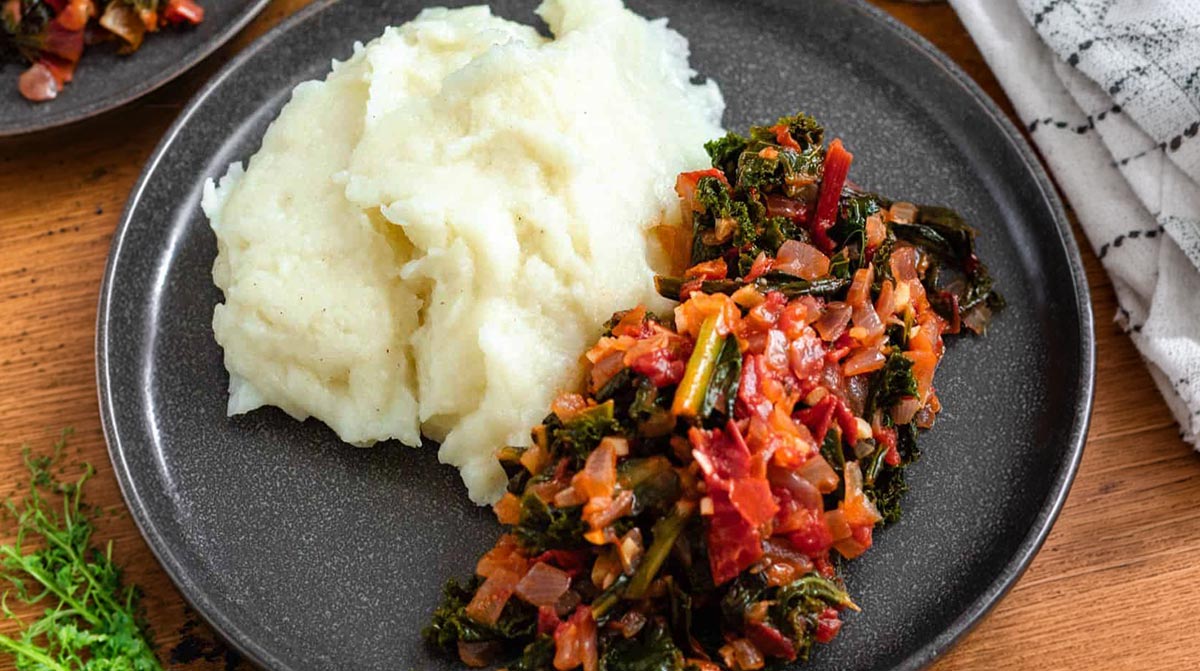
Nsima served with a savory tomato and greens relish.
Heat 6 cups water over medium heat until warm, do not let it boil.
Slowly add 1 cup cornmeal, a little at a time, mixing well before adding more. Stir continuously with a wooden spoon until a smooth porridge forms and begins to bubble and boil.
Turn and press 8 to 12 minutes until the nsima is thick and smooth. Salt, shape into six mounds, and keep warm.
Heat oil over medium heat. Add onion and cook for 5 minutes until softened. Stir in tomatoes and garlic and cook until the tomatoes break down into a thick sauce.
Stir in the greens, stock, salt, cayenne, and black pepper. Cover and cook for 8–12 minutes, stirring occasionally, until the greens are tender.
Stir in the optional peanut butter until smooth and simmer for 2 minutes. Adjust seasoning to taste and serve warm with nsima.
Nsima, Nshima, and Ugali are all names for the same beloved African staple food: a thick, dense porridge made from ground maize flour (cornmeal) and water. Serve the warm nsima beside the ndiwo, refrigerate leftovers in an airtight container for up to 3 days.
6 servings
1.5
* The % Daily Value (DV) tells you how much a nutrient in a serving of food contributes to a daily diet. 2,000 calories a day is used for general nutrition advice.